Monastery of the Holy Cross

  • Home
  • About
    • Benedictine Life
    • History
    • Video Gallery
    • Et Incarnatus Est - The Prior's Blog
  • Visit Us
    • Guesthouse
    • Prayer Schedule
      • Christmas 2025
    • The Catholic Readers Society
  • Vocations
    • Monastic Experience Weekend
    • Formation
    • Oblates
      • Oblate Podcast
  • Solemn Vespers
    • Chant
  • Contact
  • Donate

Articles under The Cross

Now Is the Acceptable Time!

February 18, 2026

“Behold! Now is the acceptable time; behold, now is the day of salvation! [2 Corinthians 6: 2]” We sing this text from Saint Paul every Sunday morning during Lent. Paul’s impassioned exhortation reminds me of the words of another Apostle. Saint Peter, in his first “homily” on Pentecost morning, says to the crowd, “Let all the house of Israel therefore know assuredly that God has made him both Lord and Christ, this Jesus whom you crucified [Acts 2: 36].”
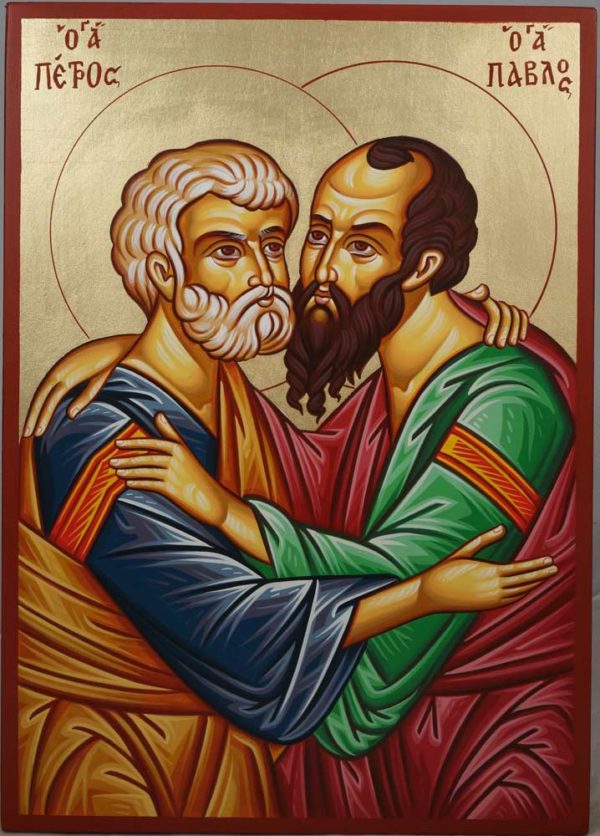
In both cases, the Apostles Peter and Paul speak with great urgency. An immeasurable change has just occurred. A man has been raised from the dead and taken up into heaven. Now is the time to act: for Saint Paul, “We beseech you on behalf of Christ, be reconciled to God [2 Cor. 5: 20]”; for Peter, “Repent and be baptized [Acts 2: 38]!” This is our chance to make things right with God.

Can we find this urgency in Lent? Lest we think that the acceptable time has come and gone,we might first note that Paul is writing the Corinthians perhaps twenty-five years after the Resurrection. The acceptable time is always now. The Church dramatically and starkly moves us to action in the liturgy of Ash Wednesday. To dust we shall return, at a time that we cannot yet know. There is no time like the present to repent. In just over six weeks, we will re-energize our baptisms by renewing our promises to serve God and reject evil. What if, in the intervening time, we were able to welcome God’s grace so as to be more saint-like when we pass through the darkness of Good Friday to the light of Easter?

There is another reason for urgency. We are discovering more and more each day, perhaps to our dismay, just how badly in need our world is of moral and spiritual renewal. The extent of evil in the world can be demoralizing. This Lent is a good time to offer our own acts of self-denial for the reparation of the harms done. The power of two billion Christians doing acts of penance and praying fervently is a good place to start tipping the scales back. We are living anew the need to “repent and be baptized,” to be reconciled to God, not for our sake only, but for the sake of the whole world. May God grant us all a holy Lent!
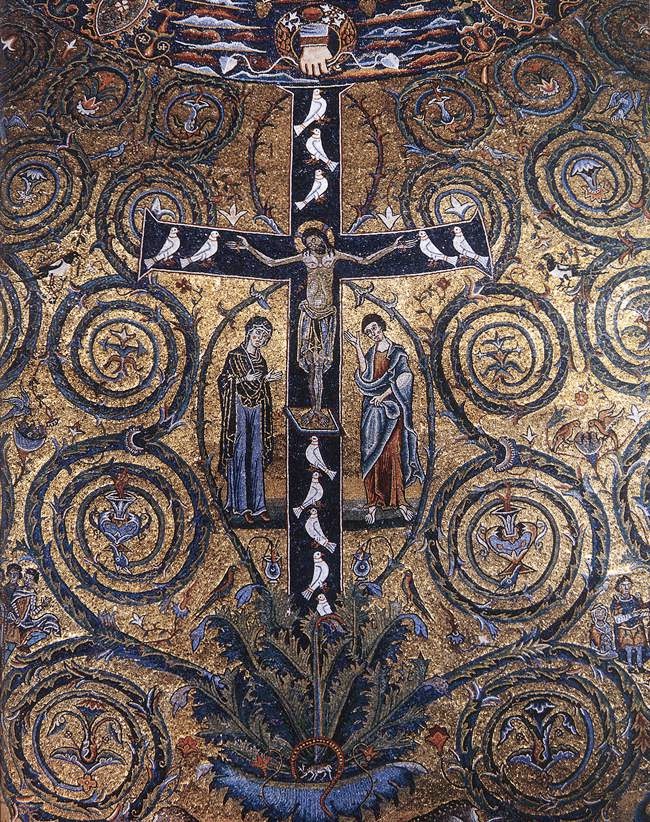
Triumph of the Holy Cross

September 13, 2025

Tonight, we begin our fourteenth season of Solemn Vespers at 5:15 p.m. Here are my program notes:

“If you want peace, work for justice.”

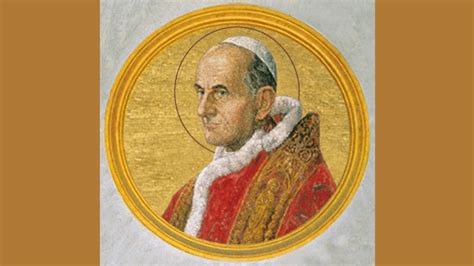
This was the title of an address given by Pope Saint Paul VI at the Vatican on the World Day for Peace in 1972. The backdrop for this address was the Vietnam War and the Cold War. The United States had been undergoing unrest internally, with radical groups carrying out bombings and assassinations. It made sense to examine the idea of peace and to discover the means to obtain it. It makes sense for us to do so right now.

The mosaic of Pope Saint Paul VI at the Basilica of Saint Paul-Outside-the-Walls

In his address, the Holy Father was at pains to make sure that peace is correctly understood. It is not something that arises spontaneously. It requires effort and vigilance, and right relationships between people and nations. These right relationships make up what the Catholic tradition calls justice. Saint Augustine defined peace as tranquillitas ordinis, the tranquility that arises from a well-ordered society. Our efforts to make the world more just will increase the likelihood of a peaceful world. By contrast, injustice breeds discord, resentment, and, eventually, violence.

There is one additional factor that the pope knew well, though he did not make it explicit in his address. In this world, peace cannot be fully attained by mere human effort and good will. The years after the Second Vatican Council fostered a kind of humanist optimism that unfortunately overshadowed the reality that our world is fallen. This unsettling fact does not mean that we are completely helpless to achieve peace, however. The New Testament offers a different way:

“For in [Jesus Christ] all the fulness of God was pleased to dwell, and through him to reconcile to himself all things…making peace by the blood of his Cross [Colossians 1: 19-20].”

“For he is our peace, who has made us both one…that he might create in himself one new man in place of the two, so making peace, and might reconcile us to God in one body through the Cross [Ephesians 2: 14-16].”

In other words, true and enduring peace is possible because of the rescue mission of the Son of God. He was sent by the Father to become incarnate in our human flesh. That very flesh was to be nailed a Cross, to suffer the gravest injustice one can imagine. Is there a better illustration of man’s inability to attain peace by his own powers? When presented with the one innocent man in history, we violently put an end to His life…by judicial murder!

Through the Holy Cross, Jesus gives us the gift of peace. To expand the thought of Saint Paul VI, we might say, “If you want justice, receive first the peace of Christ.” This is a peace from a different place: “Not as the world gives do I give peace [cf. John 14: 27].” All worldly peace is a (pale) reflection of the “peace of God which passes all understanding [Philippians 4: 7].” And there is no way to arrive at this peace that bypasses the Holy Cross, whose triumph we celebrate tonight.

It is significant that the evangelists Luke and John record Jesus, after the Resurrection, greeting His Apostles with the words, “Peace be with you.” To my knowledge, Jesus does not use this greeting before His death. The peace that Jesus gives, He gives because He has already reconciled us to each other and to the Father.

There is one more connection worth noting, this time between justice and the Cross. In tonight’s responsory, we will sing, “The sign of the Cross will appear in heaven when God comes to judge.” Thus, the definitive establishment of justice will happen at the judgment, under the sign of the Cross. The barbaric symbol of man’s injustice will be transformed into a sign of God’s love and Christ’s triumph. The Cross has become our standard, under which we fight against the injustices in the world.

Will we accept this gift of peace along with the Cross and its inverted triumph? That is a question that we Christians should always be asking ourselves, especially in our tumultuous times. If we fail to do this, we will be unwitting conspirators with the forces that would usher in an era of enforced, false peace (which is in fact fearful silence) by means of violence and the threat of violence. As we celebrate Christ’s victory tonight, let us earnestly entreat God to renew in us a commitment to “seek peace and pursue it [Psalm 34: 14]!” Let us take up our share in the Cross of Christ that we may one day share in His triumph.


© 2026 Monastery of the Holy Cross
  • Accessibility
Web Design by ePageCity