Monastery of the Holy Cross

  • Home
  • About
    • Benedictine Life
    • History
    • Video Gallery
    • Et Incarnatus Est - The Prior's Blog
  • Visit Us
    • Guesthouse
    • Prayer Schedule
      • Christmas 2025
    • The Catholic Readers Society
  • Vocations
    • Monastic Experience Weekend
    • Formation
    • Oblates
      • Oblate Podcast
  • Solemn Vespers
    • Solemn Vespers for Corpus Christi
    • Chant
  • Contact
  • Donate

Articles under The Cross

The First, Second and Third Precautions Against the Flesh

May 15, 2026

(Here is the Introduction to the whole series. Here are The First Precaution Against the World and The Second and Third Precautions Against the World. Here are Part 1 of the Introduction to Precautions Against the Flesh and Part 2 of the Introduction to Precautions Against the Flesh.)

Now we turn again to Saint John of the Cross. In the autumn, I mentioned that he had written a short work on our theme for a new Carmelite convent. So he is writing to women who would presumably already be committed to a program of celibate chastity, regular and difficult fasting, and other typical deprivations associated with religious life. But I also believe that what he has to say will be very much of use to persons in the world.

In his first precaution against the flesh, John asserts that every one of my religious brothers and sisters was sent by God to fashion me, as a sculptor fashions a sculpture by blows. Unkind actions, words and gestures cause me pain, but if I see this as purposed by God, I can remain submissive under these treatments. He believes that we will not make headway against sensuality if we are not able to bear these difficulties with patience.

To translate this into the secular state, I think that we can say that, in any line of work that we have undertaken to serve God, our first presumption should be that the difficulties caused by others in that line of work can be borne for just this purpose. We can to learn to bear with irritation, annoyance, pain and the like. Granted, these areas of work do not come with the same guarantee that religious vows are meant to safeguard. Still, bearing the weakness of body and character of those whom God gives us in our walks of life will go a long way to purifying us of self-regard and a lazy selfishness.

John’s second precaution is that, if a work is in the service of God, we should not give it up when it ceases to bring us satisfaction or pleasure. The liturgy, keeping the accounts, cooking, whatever it is. We should learn to do these things apart from whatever pleasure we might expect from them.

This, again, will happen in any line of work. There will come a time when it no longer pleases. The world today urges us to move on rather than accepting the possible benefits of tedium and self-conquest. Again, I am not saying that there will never come a time when the problems associated with your work will not be a good reason to look for another job. But we can first use that boredom and nuisance for spiritual gain.

What derives from this is his last precaution, that we should no longer hope for pleasant feelings in lectio divina, in the liturgy, in any prayer or spiritual exercise that we undertake. Indeed, when they bring bitterness, we should embrace the difficulty, what Benedict would call the dura et aspera.

John’s suggestions seem timely in our world today. The world is geared toward maximizing choice, which usually means maximizing pleasure and comfort, avoiding anything we find inconvenient or annoying. We are frequently told that authenticity requires giving in to any and all desires and curiosities, regardless of whether the kind of instability this invites does real damage to our character. It is a sign of the loss of a larger Christian worldview, centered on the Cross and the hard work of redemption. This season is an opportunity to re-engage in recapturing the world for Christ beginning with our own hearts.

Homily for Good Friday

April 3, 2026

We have no king but Caesar.

The Gospel of John is full of irony. Sometimes the irony is amusing; sometimes it’s profound; sometimes it’s depressing. One of the more depressing ironies is the cry of the chief priests when Pilate presents them with Jesus after finding Him not guilty. They say, “We have no king but Caesar.”

To grasp the depth of the irony, it is helpful to return to the Book of Judges and the First Book of Samuel, which form one narrative together, giving us the story of Israel a thousand years before Christ. The Book of Judges ends with this statement: “In those days there was no king in Israel; every man did what was right in his own eyes.”

This is not a celebration of political freedom.

The people of Israel had reeled from one crisis to another, with God regularly intervening to save her. At the opening of the First Book of Samuel, the dangerous Philistines are becoming powerful. The people of Israel are growing increasingly fearful of this new political threat, and they demand that God give them a king, a strongman to fight their wars for them. The prophet Samuel warns the people that they will lose their freedom were they to submit to a king. A king would levy burdensome taxes, conscript their sons, build up a huge government bureaucracy. Perennial human problems!

In spite of Samuel’s warnings, God Himself agrees to appoint a king, eventually settling on David. Samuel’s predictions, however, quickly come true. On the whole, the kings of Israel found it impossible to avoid compromising entanglements with the gods of other nations. Israel was never the most powerful nation, and the world powers of the time dominated them, even exiling them. After God brought them back from exile, they became client states of the Persians, Greeks, and then the Romans, which is the background situation for the life and death of Jesus, Son of David.

The kingship in Judea had been suppressed for five hundred years at this point. But there were prophecies about a return of the King, the anointed one, who would free God’s people from domination by the Gentiles. And just last Sunday, Jesus allowed Himself to be identified as this Messiah, by riding into Jerusalem, the capital city founded by David himself, on a donkey, according to a prophecy of Zechariah the prophet.

And in fact, this is the closing of the circle.

When God agreed to appoint a king, He told Samuel that the people “have rejected me from being king over them.” In Jesus, we not only have a legitimate descendant of David, and therefore a legitimate heir to the throne, but we have God Himself, ready to take up His rightful place as the King of the people whom He had, time and again, delivered from her enemies.

Will they reject Him as king again?

The emotional background to this drama is fear. The chief priests fear the Romans. They also fear the mob and the consequences of a riot. Pilate is afraid of divine nemesis of some kind, which accounts for his reaction on hearing that Jesus claims to be the Son of God. He also fears the Emperor if things get out of hand. The disciples fear getting captured and punished by one authority or another, and so they run away.

When we are afraid, we are easily manipulated. This, by the way, is one reason the news is always negative. It serves a political purpose to keep large portions of the population anxious.

The choice that we all face at some point is here before Pilate, the authorities, and the mob. When we find ourselves anxious, will we choose God? Or will we demand a powerful man or ideology or movement to attack whatever is making us anxious? And what does it look like, exactly, to choose God?

Let’s admit that this can be a challenge. Because what God looks like on Good Friday is a condemned criminal humiliated by the powers of the world. Serving this God might not be quote-unquote “safe” in the normal sense of that term. But this is to limit ourselves to too narrow a field of vision. Jesus suggests this to Pilate when He says, “My kingdom is not of this world.”

Turning to God will not necessarily give us things that world deems desirable: fame, prosperity, power, comfort, safety. Still, trusting God will give us something much, much greater: victory over death itself. Fame, prosperity, and power will not deliver anyone from death, nor can any worldly power achieve it.

In conclusion, let’s close another circle.

For the chief priests to say, publicly, before Pilate, “We have no king but Caesar” is willingly to adopt the position of a slave—or at best a client serving the interests of a pagan power. My purpose here is not to assign blame, but to present frankly the temptation that we all face in this life.

I said that God will deliver us from death. What does this look like? Is this something that we wait around for, trying to build up credits with God in the time we have left? Where is this kingdom of God, and how do we get there to avoid slavery to the world?

Well, first of all, we have our Lord’s assurance that His kingdom is among us and within us. It is not far at all. On the Cross, He is showing us how to get there. He is opening the path through death to the Kingdom.

We follow, first of all, by being conformed to His death in baptism, by taking up our Crosses daily and following Him through death to life. This requires the eyes of faith, but it has palpable results. It gives us the freedom to live without fear, to accept whatever sufferings come our way, with peace and indeed joy, for they conform us to Christ and lead to His Kingdom.

As we celebrate the mysteries of Jesus’s Passion, Death, and Resurrection, let us ask God to open the eyes of our spirits to see anew the great love Jesus showed in becoming man for us and suffering for us. May it free us to let go of fear and find true joy in the Lord.

Now Is the Acceptable Time!

February 18, 2026

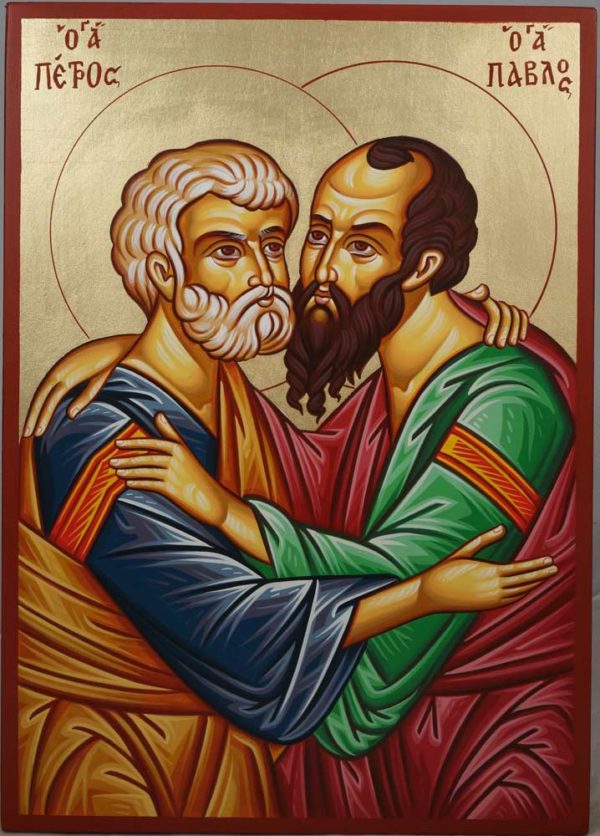
“Behold! Now is the acceptable time; behold, now is the day of salvation! [2 Corinthians 6: 2]” We sing this text from Saint Paul every Sunday morning during Lent. Paul’s impassioned exhortation reminds me of the words of another Apostle. Saint Peter, in his first “homily” on Pentecost morning, says to the crowd, “Let all the house of Israel therefore know assuredly that God has made him both Lord and Christ, this Jesus whom you crucified [Acts 2: 36].”

In both cases, the Apostles Peter and Paul speak with great urgency. An immeasurable change has just occurred. A man has been raised from the dead and taken up into heaven. Now is the time to act: for Saint Paul, “We beseech you on behalf of Christ, be reconciled to God [2 Cor. 5: 20]”; for Peter, “Repent and be baptized [Acts 2: 38]!” This is our chance to make things right with God.

Can we find this urgency in Lent? Lest we think that the acceptable time has come and gone,we might first note that Paul is writing the Corinthians perhaps twenty-five years after the Resurrection. The acceptable time is always now. The Church dramatically and starkly moves us to action in the liturgy of Ash Wednesday. To dust we shall return, at a time that we cannot yet know. There is no time like the present to repent. In just over six weeks, we will re-energize our baptisms by renewing our promises to serve God and reject evil. What if, in the intervening time, we were able to welcome God’s grace so as to be more saint-like when we pass through the darkness of Good Friday to the light of Easter?

There is another reason for urgency. We are discovering more and more each day, perhaps to our dismay, just how badly in need our world is of moral and spiritual renewal. The extent of evil in the world can be demoralizing. This Lent is a good time to offer our own acts of self-denial for the reparation of the harms done. The power of two billion Christians doing acts of penance and praying fervently is a good place to start tipping the scales back. We are living anew the need to “repent and be baptized,” to be reconciled to God, not for our sake only, but for the sake of the whole world. May God grant us all a holy Lent!

Triumph of the Holy Cross

September 13, 2025

Tonight, we begin our fourteenth season of Solemn Vespers at 5:15 p.m. Here are my program notes:

“If you want peace, work for justice.”

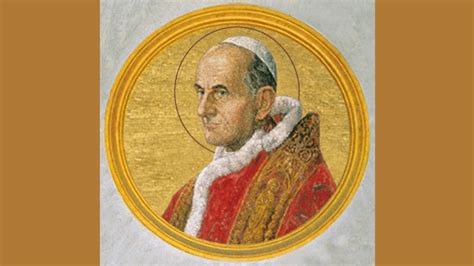
This was the title of an address given by Pope Saint Paul VI at the Vatican on the World Day for Peace in 1972. The backdrop for this address was the Vietnam War and the Cold War. The United States had been undergoing unrest internally, with radical groups carrying out bombings and assassinations. It made sense to examine the idea of peace and to discover the means to obtain it. It makes sense for us to do so right now.

The mosaic of Pope Saint Paul VI at the Basilica of Saint Paul-Outside-the-Walls

In his address, the Holy Father was at pains to make sure that peace is correctly understood. It is not something that arises spontaneously. It requires effort and vigilance, and right relationships between people and nations. These right relationships make up what the Catholic tradition calls justice. Saint Augustine defined peace as tranquillitas ordinis, the tranquility that arises from a well-ordered society. Our efforts to make the world more just will increase the likelihood of a peaceful world. By contrast, injustice breeds discord, resentment, and, eventually, violence.

There is one additional factor that the pope knew well, though he did not make it explicit in his address. In this world, peace cannot be fully attained by mere human effort and good will. The years after the Second Vatican Council fostered a kind of humanist optimism that unfortunately overshadowed the reality that our world is fallen. This unsettling fact does not mean that we are completely helpless to achieve peace, however. The New Testament offers a different way:

“For in [Jesus Christ] all the fulness of God was pleased to dwell, and through him to reconcile to himself all things…making peace by the blood of his Cross [Colossians 1: 19-20].”

“For he is our peace, who has made us both one…that he might create in himself one new man in place of the two, so making peace, and might reconcile us to God in one body through the Cross [Ephesians 2: 14-16].”

In other words, true and enduring peace is possible because of the rescue mission of the Son of God. He was sent by the Father to become incarnate in our human flesh. That very flesh was to be nailed a Cross, to suffer the gravest injustice one can imagine. Is there a better illustration of man’s inability to attain peace by his own powers? When presented with the one innocent man in history, we violently put an end to His life…by judicial murder!

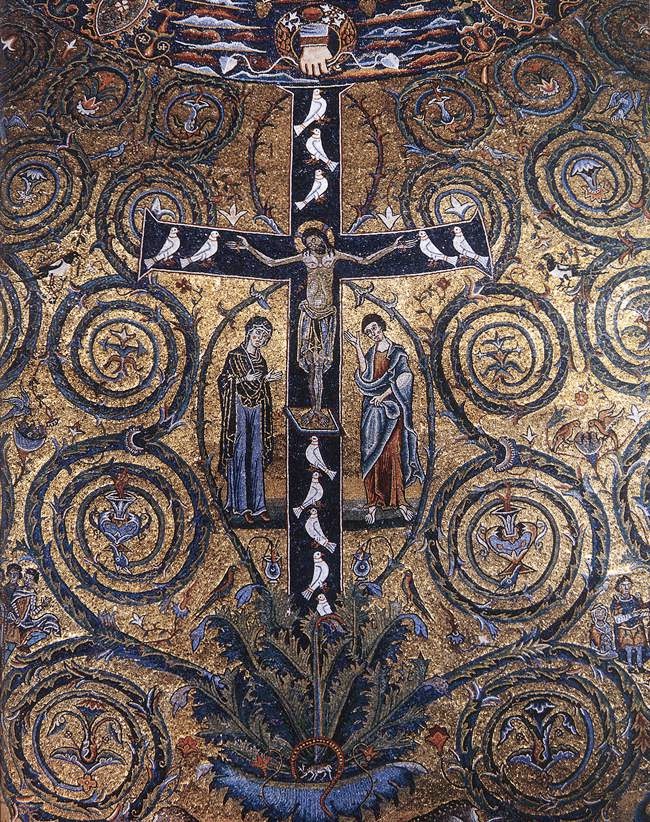
Through the Holy Cross, Jesus gives us the gift of peace. To expand the thought of Saint Paul VI, we might say, “If you want justice, receive first the peace of Christ.” This is a peace from a different place: “Not as the world gives do I give peace [cf. John 14: 27].” All worldly peace is a (pale) reflection of the “peace of God which passes all understanding [Philippians 4: 7].” And there is no way to arrive at this peace that bypasses the Holy Cross, whose triumph we celebrate tonight.

It is significant that the evangelists Luke and John record Jesus, after the Resurrection, greeting His Apostles with the words, “Peace be with you.” To my knowledge, Jesus does not use this greeting before His death. The peace that Jesus gives, He gives because He has already reconciled us to each other and to the Father.

There is one more connection worth noting, this time between justice and the Cross. In tonight’s responsory, we will sing, “The sign of the Cross will appear in heaven when God comes to judge.” Thus, the definitive establishment of justice will happen at the judgment, under the sign of the Cross. The barbaric symbol of man’s injustice will be transformed into a sign of God’s love and Christ’s triumph. The Cross has become our standard, under which we fight against the injustices in the world.

Will we accept this gift of peace along with the Cross and its inverted triumph? That is a question that we Christians should always be asking ourselves, especially in our tumultuous times. If we fail to do this, we will be unwitting conspirators with the forces that would usher in an era of enforced, false peace (which is in fact fearful silence) by means of violence and the threat of violence. As we celebrate Christ’s victory tonight, let us earnestly entreat God to renew in us a commitment to “seek peace and pursue it [Psalm 34: 14]!” Let us take up our share in the Cross of Christ that we may one day share in His triumph.


© 2026 Monastery of the Holy Cross
  • Accessibility
Web Design by ePageCity