Monastery of the Holy Cross

  • Home
  • About
    • Benedictine Life
    • History
    • Video Gallery
    • Et Incarnatus Est - The Prior's Blog
  • Visit Us
    • Guesthouse
    • Prayer Schedule
      • Christmas 2025
    • The Catholic Readers Society
  • Vocations
    • Monastic Experience Weekend
    • Formation
    • Oblates
      • Oblate Podcast
  • Solemn Vespers
    • Chant
  • Contact
  • Donate

Archives for June 2026

Homily for the Nativity of John the Baptist

June 24, 2026

Typically, we celebrate the feast days of the saints on the date of their death, their entrance into their heavenly reward. However, there are three people whose birth we celebrate. And, as it happens, we can see these three persons above the altar: Our Lord Jesus Christ, Blessed Mary, the Mother of God, and John the Baptist.

Clearly, John is an important man in the Church’s understanding of salvation history, though I think that we often overlook him. Yet Jesus Himself testified that, of those born of woman, no one was greater than John the Baptist.

So what is it about this man that is so important, and what does his feast day mean to us?

To understand this, we need to understand what is important about the prophets, for John was a prophet, indeed the greatest and last of the prophets. In popular understanding, a prophet predicts the future. This isn’t entirely wrong, but it’s a partial understanding.

The prophets do point to the future, but more specifically, to a future intervention by God—which is to say, toward God’s judgment. In the icons above the altar, we see Christ returning as king and judge, and see that John is pointing to Him. And this awareness of a coming judgment has immediate implications for the present.

When we call to mind that God will judge us—our culture, the rich and the poor, the great and small—our consciences are engaged. We have to ask ourselves: what does God make of my life? Am I prepared to receive God, or are there choices I’m making, duties I’m avoiding, that will make me want to avoid God? Is my culture one that celebrates God or rejects Him, and to what extent am I compromised by that culture?

We see, early in the gospels, John the Baptist pricking consciences. People come to him and ask, “What do I need to do to be prepared to welcome God?” In John’s gospel, we see that Saint Andrew, the brother of Saint Peter, was first a disciple of John the Baptist. When the Son of God appeared, John pointed to Him and said, “Behold the Lamb of God,” and Andrew left John to follow Jesus. Throughout the book of Acts, we see the apostles going out from Jerusalem and frequently encountering groups of people who were disciples of John, who were waiting to receive the news of the gospel and the baptism of fire and the Holy Spirit.

One last point about John is that he embodies the Beatitudes. He was poor in spirit inasmuch as he always points away from himself toward Jesus, the Son of God. Again, in the fourth gospel, he says that Jesus must increase and he, John, must decrease. He hungered and thirsted for justice, and was persecuted to the point of death for the sake of righteousness.

John the Baptist was also meek. He came from a family of priests, and in his day, the priests were often politically very well-connected. But he left the privileges of the priesthood aside to go and live as a poor man in the desert, praying and watching for God. And by these renunciations, his heart became pure, and he was given the grace of seeing God. That is to say, John was the one who witnessed the Holy Spirit descend upon Jesus at His baptism.

So we see that the Church’s celebration of John’s greatness is no mistake.

That leaves the question of what it all means for us. By our baptisms, we are called to become prophetic people. Like John, our mission is to point away from ourselves toward Christ. By a holy life in imitation of John, we bear witness to the fact that God will come to judge, and by this witness, to call those around us to be prepared.

To do this effectively, we may need to find ways to separate ourselves from the perks and conveniences that our culture offers us, since these conveniences often entangle us that culture’s overall mindset, which is largely oblivious of God and the things of God.

By gathering here today, we have taken a good first step: setting aside time to celebrate the gift of God that we have in John’s example, and to prepare ourselves to see and receive the Son of God in the Holy Eucharist.

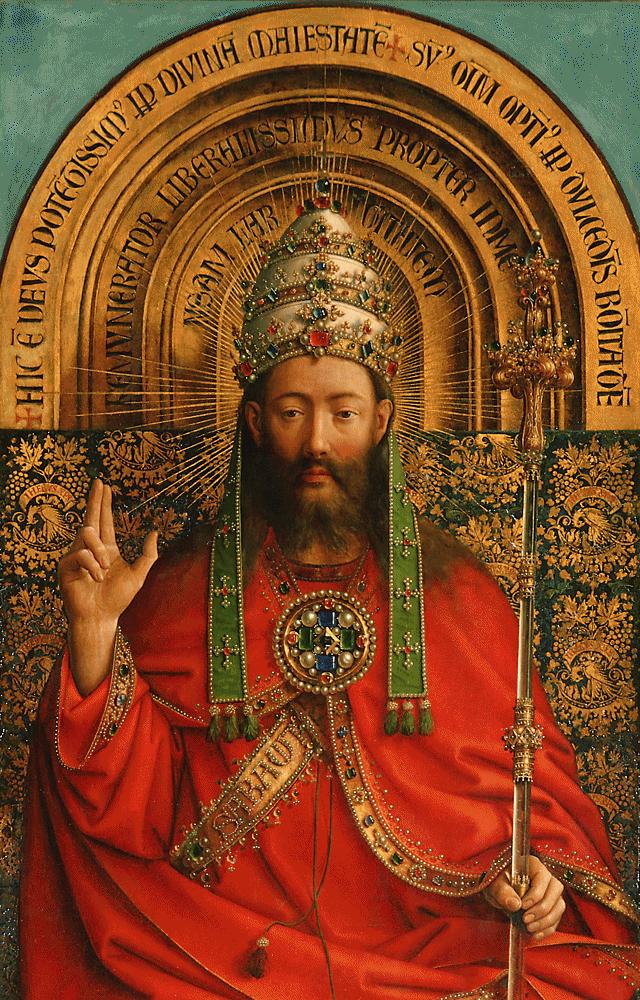
The World, the Flesh, and the Devil: The Third Precaution Against the Devil

June 18, 2026

The third precaution is to rejoice in others’ progress as if it were our own, preferring their advancement to our own. John says that we should do so especially with regard to those who are least attractive to us. In one sense, this is a corollary of the dominical teaching to love our enemies, which is the real test of charity. If there is someone we work with or otherwise encounter on a regular basis whom we find disagreeable, we may profit from doing some extra work at prayer. We can pray for this person’s well-being, perhaps his or her conversion, and take the time to think about what gifts he or she brings, even if these gifts are not immediately accessible because of some brokenness or ignorance.

This doesn’t mean lying about others’ shortcomings. It means being honest about what it’s going to take to love that person in his or her reality, rather than loving what we wish he or she would be if only our superior insight would be heeded. In my experience, this is more readily done when we know how profoundly God loves us despite our own failings, remembering that we have not earned our friendship with God. While we were God’s enemies, His Son died for us.

This brings me to an important conclusion: the necessity of meditation on the life and actions of Jesus Christ. We will notice, for example, that He did not help everyone He found. He often asked what the person needed before He helped, even though He would have known what that person needed. He could be very patient with sinners but also quite forthright with those who assumed their own righteousness or spiritual competence. He acted with authority where it was called for and, as a human being, submitted even to unjust authority. He sought out our salvation rather than His own safety and, by His humility and obedience, rescued us from death. We should ask Him frequently to fill us with His Holy Spirit, that we may know the difference between true goodness and its counterfeit. To be Him be power and glory forever. Amen.

(Here is the Introduction to the whole series. Here are The First Precaution Against the World and The Second and Third Precautions Against the World. Here are Part 1 of the Introduction to Precautions Against the Flesh and Part 2 of the Introduction to Precautions Against the Flesh. Here are The First, Second and Third Precautions Against the Flesh. Here is The Introduction to Precautions Against the Devil. Here is The First Precaution Against the Devil and The Second Precaution Against the Devil.)

Homily for Corpus Christi

June 10, 2026

What goes into preparing the food that we eat?

Ten years ago, a man named Andy George decided to try and find out by making a chicken sandwich completely from scratch. This meant growing, harvesting and grinding wheat, slaughtering a chicken, collecting salt water to extract salt, growing and pickling cucumbers, pressing sunflower seeds to extract the oil to make mayonnaise, and, last but not least, milking a cow and making his own butter and cheese.

This process took a mere six months and cost Mr. George $1500.00. Even worse than the cost: the sandwich didn’t taste all that good, at least according to his less-than-amused family members, who shared it.

And of course, there still was quite a bit of work that predated Andy George’s foray into deep agriculture. He didn’t have to domesticate a cow or a chicken. He used an electric fan to winnow his grain and an electric blender to grind it.

What all of this says is that we are very dependent on a whole series of systems in order to eat well. In fact, it’s a kind of miracle that we can go to the store at all and buy bread, deli chicken slices, pickles and onions, mayonnaise, and cheese.

Every meal is a faint glimpse of human unity and cooperation, and unconscious yearning of men and women for a common, shared life.

By calling it a miracle, I mean to imply that behind it all is a mysterious God Who has made the human race in such a way that we can cooperate and provide for one another, with systems too complex for anyone to fully understand…except God Himself.

Every meal is a sign of God’s bountiful love. But since everything happens so routinely, we can easily miss out on the wonder of it all.

It is a good practice to take a moment before we eat to ask God to bless all the persons whose work made the meal possible: from the farmers to the cheese and bread factories, meat processing plants or butchers, truck drivers and grocers.

The Israelites, after they left Egypt, suffered a bit from the myopia that often afflicts us when it comes to eating. Egypt was one of the most sophisticated civilizations of the day, and this meant that they could provide a variety of foods for delectable consumption. The Israelites forgot that much of this luxury was produced on the backs of foreign slaves. We all have selective memories sometimes.

The bigger problem was their inability to trust that if God were to lead them forth, that He would know how to provide nourishment for them. He did this through the miracle of the manna, the bread that came down from heaven.

And Moses tells us that this sign was about more than making regular provision for the people. It was a visible reminder that we depend on God for everything. We live by God’s Word.

This is the same Word through Whom all things were made, and the same Word that became flesh to walk among us. The Greek term for Word is logos, and like the Hebrew word for Word, davar, it has a much broader meaning than simply “word”. Our English term “logic” derives from logos, so that when we say that through the word of God all things were made, we are saying that God’s creatures participate in a king of logic, a rationale, a purpose.

This is why things like food distribution can work in spite of the complexities being beyond human comprehension. All things are governed by God’s Word.

God oversees and underwrites our lives. I’ve already said that the fact that we are able to eat each day because of the manifold activities given by God for men and women to carry out is a kind of miracle. This is the case for the sustenance of our natural life. What we celebrate today is the sustenance of our supernatural life. The life given to us in baptism is now nourished and grows by the gift of the Holy Eucharist.

No longer do we discern God’s Word through the insights we get into the complex interaction of God’s creatures. Rather the Word comes to us very directly, Body, Blood, Soul, and Divinity under the appearance of bread and wine. We discern His presence by faith rather than by deduction.

It has long interested me that the elements consecrated at the Eucharist are not “natural” in the sense of being directly taken from the fields or vineyards. They are the product of human artifice, just like our everyday food. Someone harvests the grain, someone grinds it, someone adds water and bakes it until it becomes bread, a symbol of the entire human cooperative project. And then God receives and blesses this offering. Our project is no longer human only, but all of our natural human projects have now been taken up into the divine project of salvation, the reclamation of humanity from sin and dispersion.

Many grains and many grapes go into the production of the bread and wine that become the Body and Blood of the Only-Begotten Son of God. He is bringing unity out of our diversity, showing what true unity and cooperation are, and not only unity with our fellow men and women, but unity and cooperation with God Himself.

And today, we will take this message out quite literally to the world, maybe just a small portion of our neighborhood, but the symbolism is that of a grand cosmic vision. As we process with Jesus, we are a sign of His desire to gather all peoples into one. We will be a silent invitation to everyone we meet to return to God, to discover in Jesus Christ the answer to our deepest longings for life and love.

The one who feeds on me, says the Lord, will have life because of me.

The World, the Flesh, and the Devil: The Second Precaution Against the Devil

June 3, 2026

The second precaution that Saint John of the Cross offers the religious is to see Christ in the superior. Again, this is not possible in a strict sense outside of religious life, but when he expands this precaution, we can get some insight into the principles behind it. The monk must obey the office, not the personality of the one inhabiting it. We do not obey authority to curry favor, nor do we resist authority because we don’t like the person wielding it.

One of the strangest aspects of the modern liberal order is the corruption of our understanding of authority. There isn’t space to go into detail on this question, but we have a default conviction that authority is bestowed by competency, and that it is mostly a question of power. All true authority derives from God, as we read in the Scriptures. It manifests itself in any corporate exercise: in the governance of a city or state, or of a university, family, team, or business. To be a university president, it is not necessary to be the best scholar. But whoever the president is, he or she has the authority to act in the interests of the university by setting policy. The presumption is that these policies should be followed, whether we like the person who is president or not, and even whether we even think the policies are unwise or unjust. When the latter is the case, we do have a certain right to raise the issue, perhaps first with someone with mediating authority, but it always must be done with respect for the office. Respect for authority is respect for all the persons under that authority.

To see Christ acting directly through authority figures is not strictly necessary and perhaps not advisable. We may be involved in an instance of accepting God’s permissive will rather than His positive will. Think of Saint Thomas More as he went to his execution: “I die the King’s good servant, and God’s first.”

(Here is the Introduction to the whole series. Here are The First Precaution Against the World and The Second and Third Precautions Against the World. Here are Part 1 of the Introduction to Precautions Against the Flesh and Part 2 of the Introduction to Precautions Against the Flesh. Here are The First, Second and Third Precautions Against the Flesh. Here is The Introduction to Precautions Against the Devil. Here is The First Precaution Against the Devil.)

Blog Topics

  • Beauty (23)
  • Contemplative Prayer (69)
  • Contra Impios (2)
  • Culture (39)
  • Discernment (38)
  • Formation (20)
  • General (43)
  • Going to the Father (18)
  • Gregorian Chant (5)
  • Holy Spirit (7)
  • Jottings (27)
  • Liturgy (102)
  • Meditations on Heaven (4)
  • Monastic Life (64)
  • Moral Theology (59)
  • Music (18)
  • Scripture (64)
  • Silence (1)
  • The Cross (4)
  • Vatican II and the New Evangelization (21)

Blog Archives

  • June 2026 (4)
  • May 2026 (4)
  • April 2026 (3)
  • March 2026 (4)
  • February 2026 (3)
  • January 2026 (2)
  • December 2025 (6)
  • November 2025 (4)
  • October 2025 (2)
  • September 2025 (2)
  • August 2025 (3)
  • July 2025 (4)
  • June 2025 (4)
  • May 2025 (3)
  • April 2025 (4)
  • March 2025 (4)
  • February 2025 (3)
  • January 2025 (5)
  • December 2024 (8)
  • November 2024 (3)
  • October 2024 (9)
  • September 2024 (8)
  • August 2024 (9)
  • July 2024 (9)
  • June 2024 (8)
  • May 2024 (9)
  • April 2024 (4)
  • November 2023 (1)
  • April 2023 (1)
  • December 2022 (1)
  • October 2022 (1)
  • March 2022 (1)
  • February 2022 (1)
  • August 2021 (2)
  • June 2021 (1)
  • May 2021 (1)
  • April 2021 (1)
  • February 2021 (2)
  • January 2021 (1)
  • December 2020 (1)
  • August 2020 (4)
  • June 2020 (1)
  • May 2020 (4)
  • April 2020 (9)
  • March 2020 (4)
  • February 2020 (1)
  • January 2020 (1)
  • December 2019 (1)
  • July 2019 (2)
  • June 2019 (1)
  • May 2019 (1)
  • April 2019 (2)
  • March 2019 (1)
  • February 2019 (3)
  • January 2019 (1)
  • December 2018 (1)
  • November 2018 (2)
  • October 2018 (2)
  • September 2018 (2)
  • August 2018 (1)
  • July 2018 (2)
  • June 2018 (4)
  • May 2018 (7)
  • April 2018 (1)
  • March 2018 (1)
  • February 2018 (1)
  • January 2018 (2)
  • November 2017 (1)
  • October 2017 (1)
  • September 2017 (1)
  • August 2017 (1)
  • July 2017 (2)
  • June 2017 (2)
  • March 2017 (1)
  • February 2017 (2)
  • December 2016 (1)
  • November 2016 (3)
  • August 2016 (2)
  • May 2016 (2)
  • April 2016 (5)
  • March 2016 (2)
  • December 2015 (1)
  • November 2015 (2)
  • October 2015 (3)
  • August 2015 (10)
  • July 2015 (12)
  • June 2015 (17)
  • May 2015 (2)
  • April 2015 (7)
 
© 2026 Monastery of the Holy Cross
  • Accessibility
Web Design by ePageCity