In this conference, I would like to address a topic that could be considered the goal of our life as monks: contemplative prayer. We use this term in two ways in the modern Catholic Church, and so it is worth taking a moment to articulate what I mean by this.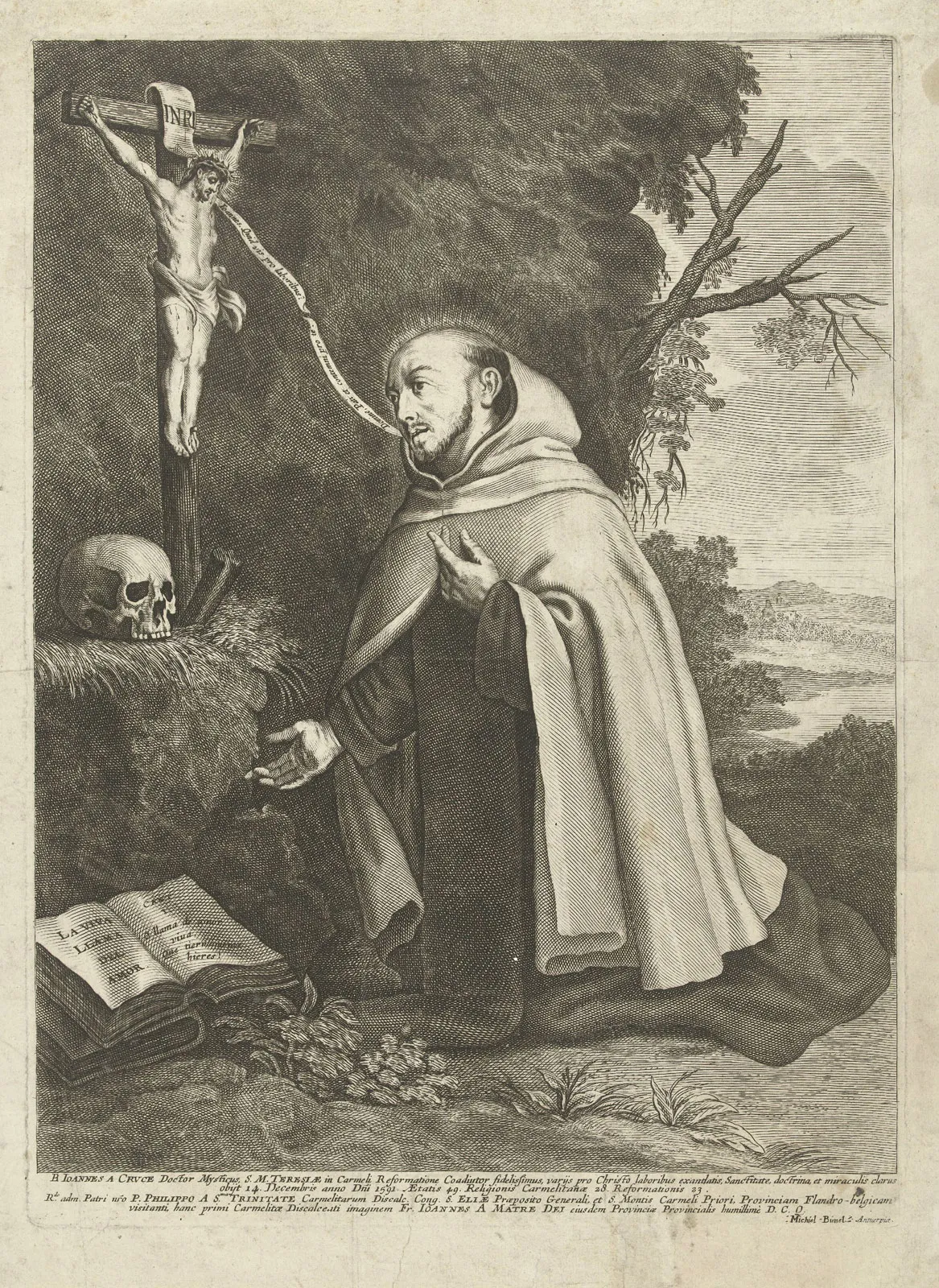
In manuals of spiritual theology in recent centuries, “contemplation” took on a technical meaning. Contemplative prayer is that prayer which, strictly speaking, is the product of God’s action on the soul, and is not at all in our power. Contemplation is very nearly the prayer of union with God Himself, or the prayer of union is understood as the highest form of contemplative prayer. Needless to say, we are not capable of uniting ourselves to God; only God can bring about this union. Our task in seeking this union with God is to dispose ourselves by asceticism, by the practice of the lower forms of prayer, by reverent reception of the sacraments, and by meditation on the mysteries of the faith. Finally, there is growth in the theological virtues, especially faith and love, which dispose us to let go of the controls, as it were, and place ourselves in God’s hands, confident of His love.
This is more difficult than it might sound. We can place ourselves lovingly in God’s hands at any time, but we are often still clinging to various attachments. The final movement toward God requires us to let go of these attachments. An attachment works both ways: we are attached to the lower good, but it is attached to our souls. The extrication of our souls from this attachment will therefore often feel like we are losing a part of ourselves. This is why we need the motivation that faith and love bring, to soldier through this experience of dying to ourselves, which is, in fact, a freeing of our truest self from anything less than God. And the goal is proximate preparation for union with God: that is, for contemplative prayer, the culmination of our seeking after God as monks.
This is one meaning of contemplative prayer. The other meaning is both more colloquial and more traditional. It is a broader concept, though it includes the technical meaning I’ve just related. This definition of contemplative prayer, in general, owes more to human action than the technical version, though, along with all prayer, it presupposes the action of the Holy Spirit in our souls. When we speak about lectio divina as consisting of lectio, meditatio, oratio, and contemplatio, we are in the right neighborhood. In reading, we grasp the literal sense of God’s Word, and perhaps get a glimpse of the deeper spiritual sense. In meditation, we explore the implications of the Word that we are trying to grasp. We notice connections that allow the Word to permeate our hearts and our awareness, our default understanding of reality. In prayer, oratio, we take this Word and the desire it has stirred up in us, and return something of our own hopes and needs to God. And then in contemplation, we simply allow ourselves to be with the God Who has been working in our souls throughout this process.
In this popular sense of contemplation, we can more frequently have experiences that foreshadow the purest prayer of contemplation. An insight about God’s love may strike us as so beautiful that tears come to our eyes. We have nothing to say to God, other than in inward movement of gratitude and perhaps compunction, as we simultaneously become aware of our own sluggishness or lukewarmness. Indeed, I would categorize compunction as very near to contemplation and almost a prerequisite.
Such contemplation can occur in many different ways. In recent years, I have experienced it listening to music. The beauty of certain pieces has struck me inwardly in a new way. One way I could characterize the difference is that when I was younger, the experience of beauty in music would move me, but I was perhaps more interested in being moved by it, perhaps felt a bit special for being “in the know”. The experience today is the utter shock that fallible human beings can produce sounds that reveal true beauty, that open a door to the abundance of beauty that pours forth from the love of God. If humans are capable of listening to their musical materials and attuning themselves so as to channel such beauty, what is God like, Who underwrites this entire experience? The experience is less about me and more about the mystery of the God Whom I am aiming to discover.
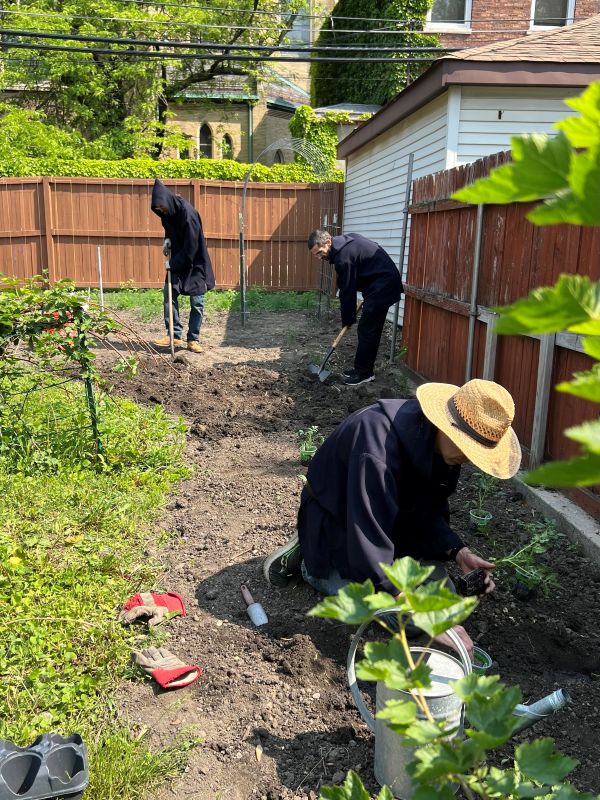
Our life is arranged so as to promote the prayer of contemplation. I mean that in several ways. Every Christian is called to contemplative prayer, but few are called to craft an entire existence around it. When our founders were looking for assistance in starting the monastery and in entering into the Benedictine world, they were seeking a strictly contemplative way of life. This is how we found our way into collaboration with Christ in the Desert. In spite of the many obvious differences in our locations and even certain emphases within the life, in both cases, we are communities that do not have an apostolate, nor have we a real industry, though that is new for us.
The difficulty involved in an apostolate is not that it isn’t, ultimately, ordered to contemplative prayer. It is rather that apostolates involve the monk in considerations that are easily influenced by the world. If one runs a school, there are accreditation boards to satisfy, there is the need to train monks to teach, and most likely the need to interview and hire teachers and staff and to oversee payroll and job reviews. Industries have similar constraints. When entered into in the right spirit, these certainly can be sanctifying. And I have a great deal of respect for monks who are able to balance the demands of prayer and the demands of an apostolate, as you know.
The way our life is organized, then, is not simply that we have more free time to prayer. That we do, and hopefully we take advantage of it. But we are also free to follow where prayer leads, without having to look over our shoulder and answer to the requirements of associations that do not have prayer as their goal.
I appreciate very much Dom DeLatte’s observation about certain monks making a sacrifice of themselves for the sake of the community. As I was thinking my way through this conference, the example that came most readily to mind is the work that I do as a fundraiser. When a benefactor makes a large gift, this is a great blessing, but it can also come with obligations. A benefactor may have expectations that we will make decisions about the liturgy, for example, that will prompt him or her to remain a benefactor. We lost some benefactors when we turned out altar around. But the decision to face East was made, I believe, from a desire to live the contemplative life more authentically, especially in our circumstances in a large city. Our own discernment suggested that there was a need for a greater sense of transcendence. In a modern city, which is often hostile to any powers beyond itself, we must have the spiritual freedom to take the steps that will best promote the search for God.
This freedom is perhaps the best place to conclude. God wishes for us to be truly free to seek Him. This freedom is both an interior freedom from vices and imperfections and an exterior freedom from the compulsions of life in an overly-connected world—from any type of coercion in seeking to be perfect disciples of Jesus Christ.