As our brothers were preparing to come to Chicago to begin living the quasi-monastic life of the Community of Jerusalem, one brother discovered an article written by the late Fr. Aidan Kavanagh, OSB. Fr. Aidan was a monk of St. Meinrad’s Archabbey and a liturgist. His book On Liturgical Theology is a modern classic, a book to be read and savored again and again. The article appeared in Worship magazine, and, if memory serves, was his acceptance speech upon receiving an award from St. John’s School of Theology in Collegeville,
Articles tagged with liturgy
Going to the Father, Part 1: Liturgy as Evangelization
We are preparing to have a new choir constructed and installed in our church. I have been invited by Fr. Anthony Ruff, OSB, at Pray Tell Blog, to offer some explanation of the theology behind the shape and placement of the choir. As a prelude to this project, and to give the fullest possible context, I would like to tell the story of our liturgical development, from the foundation of the monastery to the installation of the choir.
This story begins with our three founders working as missionaries in Haiti and Brazil
Liturgy and the Stance of Weakness
Much of the exasperation with what people term “organized religion” comes from the fact that the Christian church has often given so much weight to doctrinal accuracy that the life-giving potential of worship, and faith itself, gets lost in the shuffle, made all but inaccessible to the skeptical multitudes. The poet Jonathan Holden epitomized a common attitude when he stated in The American Poetry Review that because “religious doctrine delivers us an already discovered, accepted, codified system of values–official truth,” a truth he defines as “static,” it can never attain the authenticity of a well-made work of art.–Kathleen Norris, Amazing Grace: A Vocabulary of Faith
I for one am grateful to profit from the great work of the saints, theologians and philosophers who have gone before me and have done so much to clarify the teachings of the Church. But I see Holden’s point here.
There is a danger to inheriting an accepted, codified system of values. We Catholics can lose our hunger for the dynamism of faith, a dynamism that is fueled by challenges, doubts and arguments. It is a gift to have to hand well-thought-out stances from the Catechism and Canon Law, but how do I know if I understand them properly? How can I be sure that I am applying them in the correct contexts?
An example I like to use is the “universal call to holiness.” This is a good, solid teaching rooted in the one baptism that all Christians share. It became obscured with the rise of a type of clericalism in the Middle Ages, along with the rise of the religious orders. Before the Second Vatican Council, it could appear that the Church had two levels of holiness, the religious and ordained ministries, and then the laity. The Council Fathers stated clearly that all members of the Church are called to holiness.
In my experience since the Council, this teaching is often misinterpreted, ironically enough, because of a lingering bias toward clericalism. “The priests had their turn to be holy [meaning occupying privileged places at the liturgy and elsewhere] and now it’s the laity’s turn.” What should have been a call to greater self-renunciation and prayer appeared paradoxically to call for greater assertiveness and personal privilege for persons who “felt called.” The universal call could even be used by religious as an excuse not to engage in holy practices, since these might reinforce the distinction between religious and laity and suggest that we still had a two-tiered structure of holiness.
What went wrong? The term and the teaching are correct, but the context in which the universal call is heard and interpreted causes a distortion. What is this context? We can describe it in many ways. Our cultural situation inclines us to atomistic individualism and its attendant focus on personal rights and equality, and our ecclesial situation, at least in the years immediately following the Council, inclined us to a “professional” understanding of the charisms, an understanding based in an overemphasis on the Church as the “Perfect Society,” and exemplified by the priest as certified dispenser of sacraments, reporting to the bishop as CEO of the diocese.
What is the correct context, then, and how do we find it, if we have to live in a culture that causes these distortions? The answer is found in the liturgy. Ut legem credendi lex statuat supplicandi. “That the law of praying established the law of believing.” Often this more exact phrase is rendered more simply, “Lex orandi lex credendi,” the law of prayer is the law of belief. In either case, we see that the “already discovered, accepted, codified system of values” should be in-formed by the practice of the liturgy, in which we conform ourselves to the high priestly prayer of Jesus Christ. This is what Kathleen Norris is after when she contrasts doctrinal accuracy with “the life-giving potential of worship.”
This also connects with what I was attempting to explain in yesterday’s post. Church teaching has not recognized same-sex marriage, and the weight of tradition is against such recognition. But how do we understand and live the truth of this teaching? As I wrote yesterday, I don’t really know, and I’m not sure that anyone is all that sure. We are in uncharted waters, and the biases of my own culture are against me [see: The first engagement with culture is at the level of thoughts]. I need a renewal of my mind and heart and I need the power of God to do this. So I must be content with my weakness.
The liturgy is the exercise of the high priesthood of Jesus Christ. When we enter the liturgy, it is Christ Who is the main ‘agent’ (which is why so many discussions about ‘active participation’ are confused), and we are all participants in His action of praising the Father in the Spirit. We are caught up in a world being brought into being, a world in which the True Light enlightens our minds and hearts that we may discern what is God’s will and carry it out with courage. At the liturgy, it is alright to be weak, because there God is strong, and this becomes our default stance toward the world. Liturgy is also full of a lot of confounding rites, texts, vestments and stimuli at once disorienting and reorienting. In this space of conversion to a new orientation toward Christ in all things, we have the chance to reassess argument, to hear anew the Word instructing us. We also see and experience the persons to whom we must first submit our ideas for living a new life. The liturgy sets the bounds of the community of faith and gives us our first audience for a new understanding.
More to come.
Discontinuities in Liturgical Music
If you are in the Chicago area this Friday night, I hope that you will come by the monastery for Solemn Vespers at 7:00 p.m. The service will last for about 45-50 minutes and will feature the exquisite motet Tu solus, qui facis mirabilia. Unlike the version in the embedded video, however, our Schola will be singing it as a part of the liturgy, and your hearing it will be as part of the publicly assembled Church at worship! Also scheduled: Magnificat by Palestrina and Gustate et videte by di Lasso. And finally, we will be debuting a piece composed just for this celebration of the Sacred Heart of Jesus, Auctor beate saeculi by Kevin Allen.
I spent Monday morning at the Regenstein library at the University of Chicago, in the forlorn area of the stacks where rest the a cappella liturgical compositions of the 14th century to the present. I was enjoying myself browsing, hoping to discover some long-overlooked masterpiece (I found several dusty books of obscure pieces–we’ll see whether they turn out to be masterpieces). After about an hour of browsing, I was struck by the almost complete gulf between the music of the sixteenth century and that of the seventeenth. Compare, for example, a Magnificat by Orlando di Lasso (ca. 1532-1594):
…and a setting by Giovanni Gabrieli (ca. 1554-1612):
So these are two composers separated by one generation. Gabrieli is thought by many to have studied under di Lasso, which is why I chose these two in particular. In di Lasso, one can hear already some incipient Baroque elements, to be sure. And he was a much more prominent composer of secular music than was his exact contemporary, the hallowed Palestrina. But Gabrieli moved in an entirely new direction (Mind you, I love Gabrieli’s music!). He was not alone. Claudio Monteverdi (1567-1643), a priest, was the most celebrated figure of the revolution from Renaissance to Baroque style. Significantly, he was one of the pioneers of the new secular humanist entertainment, opera. His opera L’Orfeo is the earliest opera still in the repertoire.
Back to my Monday experience: what we see in liturgical music of the seventeenth century is precisely the importation of these secular humanist elements into liturgical music, necessitating a break from tradition. For example, the tradition of alternating chant and polyphony in the singing of the Magnificat, is almost always dropped, so that the whole text is set for the choir and orchestra. Also quickly gone is the association of the Magnificat with a particular ecclesiastical mode (or scale), drawn from the proper antiphon of the day (On Friday, we will sing Palestrina’s Mode 1 setting because the Solemnity of the Sacred Heart uses the antiphon Ignem veni mittere in terram, “I came to send fire upon the earth…” which is in the First Mode). Practically speaking, this means that in the new style the monks, canons or nuns, whose job it is to pray the liturgy, are squeezed out in favor of the professional musicians. The particular consecration of specific men and women for the performance of the liturgy is obscured. I will leave an exploration of the consequences of this obfuscation to a later post.
There are many other similar consequences. That these were not apparently felt at the time is somewhat surprising. Why? I mentioned Palestrina’s name with hushed, respectful tones above. He was the greatest composer in Rome at the time of the Council of Trent, and he took it upon himself to forward the Tridentine reforms. Among these were calls for the simplification of liturgical music. Some council fathers had been prepared to restrict liturgical music to Gregorian chant, and legend has it that Palestrina himself rescued polyphonic music for the liturgy with his composition of the sublime yet direct setting of the Mass for Pope Marcellus II:
So within two generations of the council, it seems that liturgical music was largely going its own way, quite contrary to the expectations of many at Trent.
I wrote last week about discontinuities in monastic tradition and the difficulties that these pose for the recovery of a vibrant monastic tradition. Here, I suggest, is a similar discontinuity in liturgical music, one that is probably as radical, in its way, as that which happened after Vatican II. On the other hand, it has more in common with the hidden discontinuities in the broader intellectual tradition of the West, in the sense that it was not clearly perceived as such at the time. And when it was perceived as at least a change, this change was celebrated by those in the know as a liberation from hidebound tradition and a recovery of ancient models of music, which it was not–this was pure propaganda of the sort that Renaissance thinkers excelled in.
Next time: the specific problem of discontinuity and Pope Emeritus Benedict XVI’s brilliant remedy of the Hermeneutic of Continuity.
Hand On What You Receive
Key concept #2: Traditions are arguments before they are agreements. And then they are arguments after they are agreements.
(h/t to Adrian Belew)
This appears to me as one of Alasdair MacIntyre’s most important insights. He borrowed the idea from Blessed Cardinal Newman, and he refined it considerably.
Why is this important? For several reasons, though I will mention two today.
In my previous post, I said that liturgy is ‘first theology‘. A fine sounding notion! But what do we find when we gaze out upon the liturgical scene in the contemporary Church? Lots of disagreement. In fact, you will hear Catholics say that we’ve been fighting over the liturgy for forty years or more. And this liturgical stew only got messier when Pope Benedict XVI gave priests permission for a wider use of the ‘extraordinary form’ of the Mass. So what, exactly is the material of the liturgy at this point, the material that is supposedly going to give form to prima theologia?
I would not argue that our present situation is ideal. But I also don’t believe that the situation in, say, 1950 was ideal, either, but for the opposite reason. Church tradition had come to be seen as something unchanging and unquestioned. Now, by contrast, it has come to appear as something up for grabs. The reality is something else. Tradition is an argument. And it is an agreement on what to argue about and how to argue. It is not true that tradition-as-argument means ‘anything goes’. It may appear that way in an emotivist society, such as ours is, where arguments are not rational but are exercises in emotional manipulation.
This brings me to the second point. The idea that traditions are arguments makes it possible for them to be rational. MacIntyre generally shows great respect for other thinkers, even when he strongly disagrees with them. This makes his open criticism of Edmund Burke more piquant. Why is Edmund Burke in his sights?
During and after the French Revolution, Burke began to write down his intellectual defense of Tradition. Few people are aware of just how radical many elements of the Revolution were. There were movements to change the names of the days of the week and the months of the year. There were proposals to renumber the years, using a starting point other than the birth of Christ. There were proposals to change the length of the week and the month, to remove them from the lunar associations. Why? The supposed goal was to organize society in a more rational manner. A month of 30 days or so may or may not prove functionally most effective for human organization, or so the theory went. So maybe ten months of 36 days would make more sense. Maybe eight days of work and two days off…It was all slightly crazy, though it must be stressed that this was done in the name of reason.
So what did Burke do? Did he give a defense of the rationality of tradition in the face of these assaults? Not really. In fact, in his writings he comes close to celebrating tradition precisely as irrational. And this thinking has infected us ever since. Why genuflect when you come into Church? Because the Tradition says so! And don’t ask any more questions! Why did the old Ember Days have seven readings on Saturday? Who knows? And who cares what reasons there might have been–we ‘traditionalists’ don’t need to ask these questions. [This is strongly akin to the same way in which ‘blind obedience’ came to be a religious virtue.] I’m exaggerating, but the point is, for a tradition to be rational requires something like what Newman and MacIntyre have taught us: there must be some way for those engaged in the tradition to give each other persuasive reasons for doing one thing rather than another.
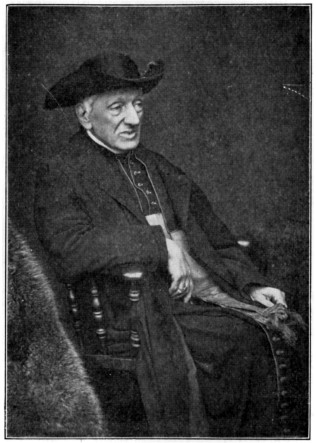
As a young man, Newman discovered that the post-Apostolic Church shaped tradition by arguing about its development.
Where we stand with the liturgy today is, I believe, somewhere before the midpoint of what I hope will turn out to be a fruitful (though tumultuous, alas) reflection on the meaning of the liturgy. Consider the choice facing a pastor who wishes to celebrate the extraordinary form of the Mass: he could, of course, simply begin offering Mass in this way because he has personal feelings in favor. But more often, what happens is that he decides to do so for reasons: to educate his parishioners on the broader tradition of the liturgy; to foster a greater sense of devotion; and so on. Now, once he gives such reasons, and hopefully he does so either in some public parish forum or to his fellow clergy in the local deanery, he is open to being criticized for his choice and for his supporting reasons. He will have to make a defense of his reasoning, and he will have to appeal to shared agreements about the liturgy in order to persuade others. He may end up abandoning the project, or he may convince others to begin celebrating the extraordinary form. Or they may continue to disagree, but now the argument has become considerably more refined on both sides (we hope). Everyone has had to reflect together, and so have become more reflective and reasoned. And out of such exchanges, the Church as a whole will gradually come to have better and better reasons for clearer and clearer choices. As poor choices are weeded out and lame reasons are abandoned, the liturgy will come to be more recognizably consistent, and–very importantly–more ‘rational’ itself. But not ‘rational’ in the Enlightenment sense–I mean this in the sense that we are to offer to God “rational worship!”
“I appeal to you therefore, brethren, by the mercies of God, to present your bodies as a living sacrifice, holy and acceptable to God, which is your spiritual [Greek–logiken…logical!; Latin–rationabile…rational!] worship [Rom 12: 1].” This in turn will allow us to “be prepared to make a defense [lit. “to give a reason”; Gk–logon, Latin–rationem] to any one who calls you to account for the hope that is in you [1 Peter 3: 15].”
P.S. For those of you who don’t know who Adrian Belew is, he wrote and sang (? shouted?) the lyrics to this…song:
Prima Theologia
Key concept #1: Liturgy is theology. In fact, it is primary theology.
The “Benedict Option” as exercised by actual Benedictines, is not a rejection of the world, but of regnant worldviews that distort and obscure the gospel. Which is to say such worldviews obscure reality. This is because Christ the Truth came from the Father to free us from sin and error. Worldviews are not so easy to change. They are generally the whole background of everything we think and do. To subject our worldview to a systematic examination can be profoundly disorienting. We should recall that it took Saint Paul many years to sort out the full implications of his conversion (he doesn’t specify, but note the passage of seventeen years in Galatians 1: 18–2: 1, some of which was certainly spent rethinking everything). Saint Antony the Great retreated to the desert around the age of 20 and emerged as a public figure again at 50. Things take time.
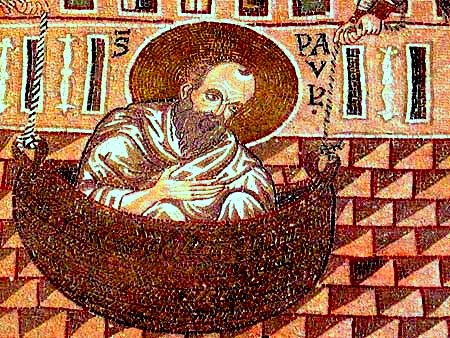
Paul’s early career was a series of reversals. Here is depicted his stealth escape from Damascus, the city where he had gone to persecute Christians.
But it helps when others can point out something of the goal, something of the discrepancy between what we had been taking for granted and what our new worldview-in-Christ should look like.
In the early Church, theology was roughly the equivalent of contemplative prayer, a first-hand, personal knowledge of God. This is to be distinguished from knowledge about God or from mere knowledge that God exists, hearsay accounts of God. But contemplative prayer took for granted the Church and the Church’s regular engagement in liturgy. Liturgy is our participation in the exercise of Christ’s high priesthood, the lifting up of our hearts and minds to God, our mystical encounter with God.
Toward the end of the Middle Ages, the word ‘theology’ began to undergo a certain transformation, becoming the more familiar academic concept. This wasn’t entirely bad; in fact, there were many good things that came about from the more systematic application of philosophical methods to the common fund of the knowledge of God.
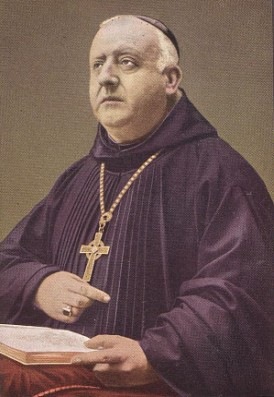
Blessed Columba Marmion, OSB
But this new idea of theology is at a second remove from the encounter with God. At least it can be performed that way. This began to be felt as a problem in the early nineteenth century, as the effects of the Enlightenment began to be felt even within the Church. The roots of the liturgical movement are found in the efforts of Dom Prosper Gueranger and the Wolter brothers at Beuron. In both cases, an effort was made to experience a fuller liturgical celebration. The movement gained greatly in the twentieth century and bore real fruit in the Second Vatican Council (even if it’s taken us time to sort of the wheat from the tares in the intervening years). The liturgical reforms of Vatican II were meant to help re-open the font of theology to everyone, to make available the insights of Benedictines like Odo Casel, Lambert Beaudoin, and Blessed Columba Marmion, for the whole Church, especially those outside the cloister.
Joseph Bottum relates a telling anecdote in An Anxious Age. He is discussing contemporary Catholicism with students in California. One tells him, “I just go to church for confession, to pray, and to take Communion.” The gist of the story, in Bottum’s version, is that young people tune out the homilies and don’t expect much from priests, other than that they show up and dispense the sacraments. What strikes me in this quote is the lack of any sense that Communion, confession, and prayer are all liturgical acts, couched in a whole world, strewn with Biblical vocabulary, thick symbolic gesture, and so on. Rather than living an entirely new life in Christ, the sense is that we go on living in the old world, the one that’s passing away, and from time to time we get our sacramental immunization shot a church, then return to that old world, hopefully not to lose too much fervor along the way. This is better than skipping church! But is it adequate to the New Evangelization that we are being challenged to undertake?
We all know (thanks to Vatican II and Saint John Paul II) that the Eucharist is the source and summit or our baptismal lives. But how do we make sense of it? The Church has given us a whole liturgical discipline to assist us in unpacking the life-altering content of Christ’s gift.
Acclimating ourselves to this “Liturgical Asceticism” (I use here Notre Dame prof David Fagerberg’s term) takes time. And so often when I mention this idea of liturgy as primary theology, the concern is that we need something more immediate, effective, engaged! Something slimmed down for a jet-set generation.
But this was part of my point in mentioning Paul and Antony. Learning to see with spiritual eyes does take time. Yes, there are prodigies like St. Thérèse of Lisieux, who benefit from saintly parents and a strong Catholic culture in general. But for most of us, in most ages of the Church’s history (we conveniently forget that the first thousand years were not always so resoundingly successful in the West!), divinization is a long, and sometimes arduous process. And why not? Isn’t the God of all peace worth the finite struggles of this temporal life? More to come.
The Love of Learning and the Desire for God
In the hands of a genius or a saint, or, even more so , a man who, like Bernard, is both, the artificial, the factitious, and art become natural, or, rather, nature yields itself unrestrainedly to art and its laws.
The specific type of cultural engagement of monasticism does not simply dissolve culture. It creates a new culture. Few have illustrated this with such erudition and passion as did Fr. Jean LeClercq, OSB. I opened with his description of the high art of St. Bernard’s prose and poetry.
Liturgical Continuity
One of the features of the liturgical reforms following Vatican II is the abundance of liturgical options available. The calendar, the rubrics and the readings and prayers from the Missal had been completely fixed for some time, and as times have changed, and as the Church has moved into new mission territory, it seemed sensible to offer bishops and priests more flexibility in the celebration of the liturgy.
I never gave this much thought until I became a religious superior and was responsible not only for my own choices, but that of the priests under my authority. There were several difficulties that I began to encounter. One was that when we change parts of the liturgy on a regular basis, those celebrating it become unnecessarily self-aware, focused too much on correct execution (or, frequently enough, stewing over lame execution). To use an analogy from my musician days, every liturgy feels like debuting a newly composed song, and it might come off pretty well for the audience, but the performers are sweating, counting, wracking brains to remember transitions, agreed-upon dynamic changes and the like. I recall one great compliment my old band received from a friend who drummed in another band. After we recorded our first CD, he noted that we began to play our old songs as if they were covers (familiar old songs learned from someone else’s recordings). He meant this as high praise: we were relaxed enough to mean what we playing because we weren’t thinking about it, we weren’t watching ourselves. Our songs had become old friends. We were comfortable with them. He was a perceptive enough musician to hear this difference.
It has taken me eleven years as a superior to feel as if the Easter Vigil were natural. Some things can’t be rushed and can only be learned by repetition through time. The liturgy is a bit like good wine: it improves with age…so long as you don’t grab the fermenting barrel and stir up the lees constantly.
So we had already been desiring a more stable liturgy when I became Prior. Then a new question arose. Given the number of options available, what principles should guide our selection of one option versus another? The temptation is just to have confidence in oneself and one’s pastoral instincts. But there were a few problems with this approach. First of all, I had only been a priest for three months when I started in office, and I had no pastoral experience of any reasonable kind. Second, for any argument one could make for one sort of choice, an equally compelling argument could be made for the opposite choice. My own study of the liturgy, mainly through Gregorian chant and other musical questions, led me to be wary of assuming that I understood the reasons that old customs and phrases existed in the liturgy. A restless progressivism infects most modern persons, and it would be foolish to imagine that I’m immune to this self-serving ideology that makes our own time the pinnacle of human intellectual and cultural achievement. I was suspicious of this anyway as a musician. Can it reasonably be argued that our liturgical music has progressed since the composition of chant? Since Palestrina? Since Mozart?
As he has so often in our community’s history, Pope Benedict XVI (formerly as Cardinal Ratzinger) gave us a key for thinking through this dilemma. His ‘hermeneutic of continuity‘, which proposes that we see the One Catholic Church on both sides of the council reforms offered a first principle. Where options exist, choose the one that is in continuity with the 1962 Missal, unless there are compelling reasons otherwise. This is harder than it might sound, mostly because the lectionary has been so radically changed. But it has helped to stabilize our liturgy, and also helped us to have a greater appreciation of the Extraordinary Form.
The second major influence was the late musicologist Laszlo Dobszay. Note again the fact that he was actually a musicologist and not a liturgist. I think there are advantages to being outside of the liturgical studies establishment and in the fast-evolving world of historical studies in music. In any case, his final book argues that we will eventually probably return to the ‘old Mass’ (with certain needed, but less drastic, reforms) and admit that the new was a mistake. Perhaps. I think that this is too radical itself. I personally suspect that there will be a conscious reform of the reform in maybe another two generations, once my generation is gone at least. But also it will happen at a time when critical lessons will have been learned and some agreement will have been reached about what to fix and how. In the meantime, I’ve taken it as my goal to come at this from the other direction. My question is, “To what extent does the Church’s law permit me to adopt the forms of the previous Missal so that our present celebration is more continuous with the preconciliar Mass?” Note the importance of acting within the law. Pope Benedict XVI explicitly ruled out confusing to the two forms. On the other hand, we have found that an historically-informed study of the whole of the liturgy offers all kinds of opportunities for recovering older practices that were illegitimately suppressed or just forgotten. At Kevin’s suggestion, I will write about them from time to time. But you can experience them at virtually any liturgy you attend at the Monastery of the Holy Cross, especially for Mass, but including the Divine Office and other celebrations. We have found the results to be eye-opening and prayerful, and we hope that this will make some small contribution to the strengthening of liturgical observance throughout the Church.