 From the perspective of history, the timing of All Saints and All Souls is an accident. The Church didn’t choose to place them in November because of any relationship to autumnal weather. But from the perspective of faith and Providence, what could be more fitting than celebrating All Saints and All Souls in November?
The argument for All Saints is a strong one but requires perhaps a bit of specialized knowledge. In the Old Testament, there were three major feasts in which all Jews were to visit Jerusalem: Passover, Pentecost, and the feast of Tabernacles. They marked the first growth of the crops in the spring, the first fruits in early summer, and the ingathering of all the crops in the autumn.
In the Christian calendar, these feasts correspond to Easter, Pentecost and All Saints. Easter celebrates the Resurrection of Jesus; Pentecost, the extension of salvation to the People of God, the Church; and finally, the salvific ingathering of all of the nations is celebrated on All Saints. In fact, in the first reading from yesterday’s Mass from the book of Revelation, we see the multitude of saints in heaven whom no one can number, processing with palm branches, which is exactly what was done during the feast of Tabernacles, the autumnal feast.
So that’s a bit obscure—hopefully less so for you now than it was a minute ago. But for All Souls, the correspondence is not abstract at all. It’s something that we feel at gut-level.
All around us, the world has the look of weariness, enervation, even death.
The arrival of winter in many ancient cultures was connected with death, often the death of a goddess, such as Persephone in Greek mythology. As the darkness begins to overwhelm the light, as vigorous green shrivels into auburn, and animals gather food for the coming hibernation, it is fitting to ponder our own mortality.
Faces of the dead, once familiar to us in life, pale more and more each year.
This could be a sobering call to Stoic detachment, acceptance of the finitude of all creatures.
For us Christians, All Souls Day does resonate with that grim reality. We, however, are permitted to feel it differently than do the Stoics.
Just as Jesus wept at the death of Lazarus, the Christian is allowed to experience the real pain at the loss of loved ones, to feel the sting of lost potential, broken relationships that never had the space to heal, things we would have said if we knew when a friend was going to be passing beyond this world. All Souls Day does not ask us to bracket these feelings, but to use them as motivations for prayer.
In fact, those relationships are not over. They have entered a new phase, and perhaps a more productive one, precisely because one half of it is now beyond the corrupting effects of this fallen world.
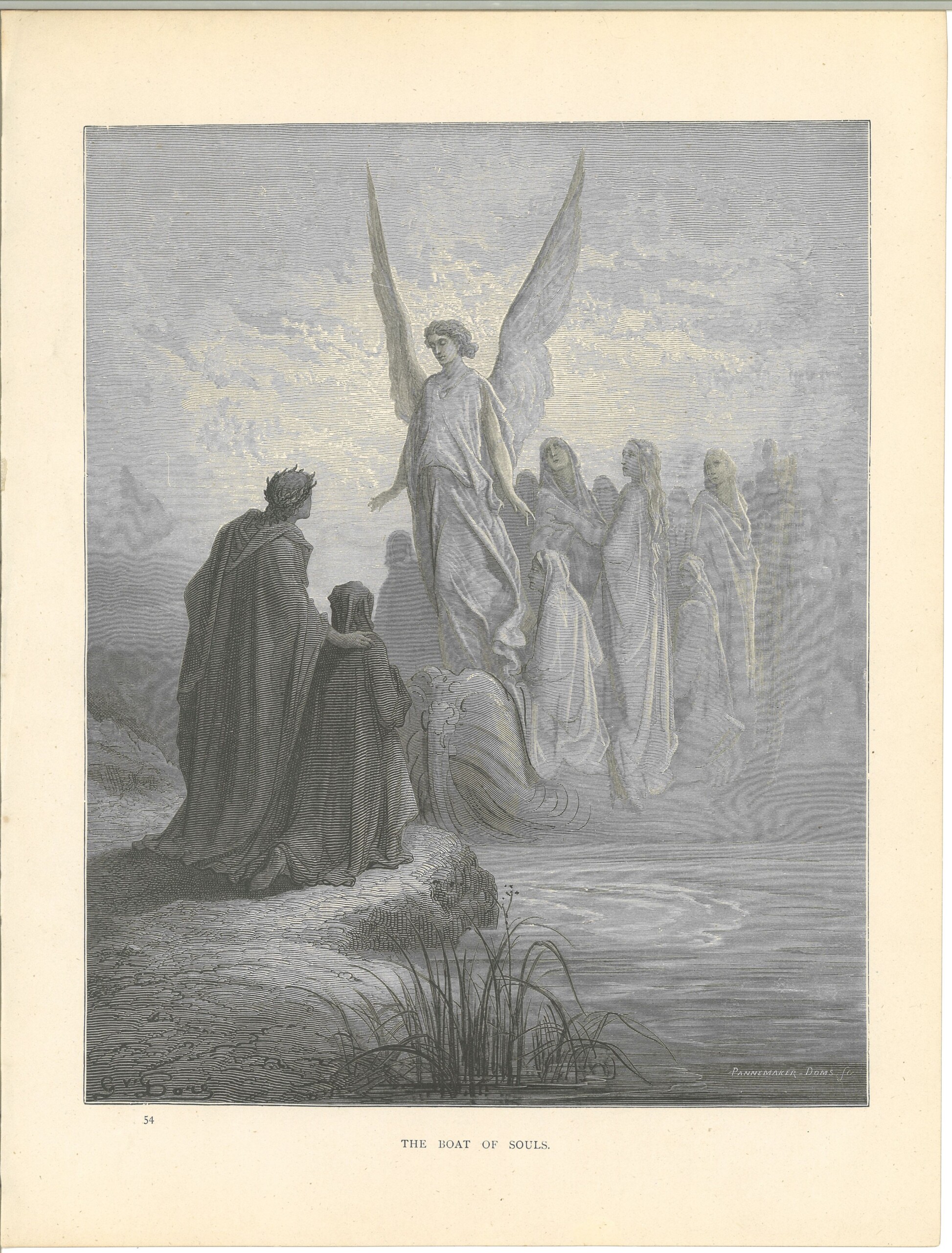
To explain this idea, let me invoke one of the greatest Christian poets, Dante Alighieri. In the middle book of his Divine Comedy, he travels through Purgatory.
He meets thousands of souls doing the exacting labor of purification from their sins. Does this agony make them bitter? Not at all; in fact, a quiet joy pervades the entire book. These souls are saturated with hope and a confident longing for an eternity of peace and rest. When they discover that Dante is still alive in the body, they entreat him to pray for them and to ask everyone else to pray for them.
Nothing helps these souls like the prayers of the living. It lightens their burdens, renews their strength, and brings them great joy and gratitude.
We are gathered here tonight to assist just such souls with our sacrifice. And so I return to those troubled relationships that we have all known—that unfinished business with deceased family members and friends.
Think of that exacting parent or grandparent or teacher for whom none of our actions ever seemed to merit praise. Or the friend suffering from addiction who always had an excuse for one more drink and then blamed it on us. Or the person whom we deeply wounded by a thoughtless or even malicious word or action, with whom we were never able to make a satisfactory apology to get back to a time before the estrangement.
In these relationships in this world, often enough we are simply reduced to prayer in trying to mend whatever wounds opened between us. But now that relationship has something new about it: the departed have taken an irreversible step toward God. And even amid the exacting and just penance, the dead know the presence and love of God in a way that was not possible in this life. When we reach out to them now, and we send up prayers for them in this new dispensation, the response we get is no longer suspicion, bitter recrimination, or criticism, but gratitude. For the relationship on their side is from a place that knows forgiveness and real hope. With sights set on heaven, these souls have no time or inclination to rehash old injuries.
Finally, our anxiety about the state of their souls is a sure sign of our love for them, often so clumsily offered. Our love is the slenderest hint of the truly overpowering love of God. And just as the leaves falling about us are not, in fact, a sign of final death, but of the sleep that precedes the fresh burst of new life, so our separation from the dead is not an eternal one. It is a quiet, mysterious preparation for the eternal glory to be revealed in all of us, restored to full and loving communion with God and one another.
We send up our prayers in deep concern, but also with unshakeable hope that the death and Resurrection of Jesus Christ is our death and resurrection, that the love of God is stronger than death. While their going forth from us seems in the eyes of the world to be utter destruction, in the embrace of Christ, they are at peace.